Some decisions can’t be settled on a spreadsheet.
Principled Decision Making gives leaders and their teams a clear way to test any hard choice against two principles: the dignity of every person it touches, and the common good of everyone involved. The whole framework is free and explained on this page.
Learn the framework ↓Get the printable worksheet
The costliest decisions often look right on paper.
Most leadership teams are good at the questions a spreadsheet can answer. Will it pay? Is it legal? Can we pull it off? Those questions matter. But a decision can pass every one of them and still cost the organization something it can’t easily get back: the trust of the people who have to live with the result.
It rarely happens all at once. A restructuring carried out without care. A deal that’s profitable but quietly wrong. A policy that hits its numbers and leaves people feeling expendable. Each one gets filed under “just business.” Over time, those decisions become the culture, and people learn what the organization really values.
Principled Decision Making starts with a different question.

Does this decision honor the people it affects, including me?
That question doesn’t replace the financial, legal, or operational analysis a good team already does. It adds what that analysis tends to leave out. Every significant decision lands on real people: employees, customers, partners, the community around the business. Principled Decision Making asks leaders to name those people and weigh what the decision does to them, not only what it does for the bottom line.
The last two words matter. “Including me” is a reminder that the person making the call is affected too. A leader who signs off on something they can’t defend in good conscience pays a price, even if no one else ever finds out. So does the organization they lead.
Asking the question is the easy part. Answering it honestly takes structure, and that structure rests on two principles.
Two principles that give the question its shape.
Human dignity
Every person a decision touches has worth that doesn’t depend on their role, their output, or their place on the org chart. Principled Decision Making asks leaders to treat that worth as fixed: something a decision must respect, not a variable to trade against the numbers.
The common good
No organization exists in isolation. Every decision helps shape the conditions people work and live in, inside the company and beyond it. The common good asks whether a choice leaves those conditions better for everyone involved, not only for the decision-maker or the bottom line.
Held together, the two principles keep each other honest. Dignity alone can become protecting one person at everyone else’s expense. The common good alone can justify sacrificing the individual for the group. Principled Decision Making asks leaders to honor both, and when the two pull in different directions, to see that tension clearly. A simple tool within the framework makes that tension visible.
Both principles are drawn from Catholic social teaching, a body of thought refined over more than a century, and any person of good will can recognize them as right.
Put every option on the map.
The Dignity Chart is a simple tool within the Principled Decision Making framework. It sets the two principles on two axes, human dignity and the common good, and lets a leadership team plot each option it’s considering. Where an option lands shows what it honors and what it costs.
The principled path
The option honors the dignity of everyone it affects and serves the good of the whole organization. It’s the hardest place to reach, and it’s where every decision should aim. Often a team finds a Q1 option only after the chart shows them their first ideas fell short.
Integrity held, cost absorbed
The team protects people’s dignity, and the organization absorbs a short-term cost to do it. It isn’t a failure. It’s often a necessary step toward something better, but it isn’t the place to settle.
Disengagement
Neither principle is served. This is the decision that never quite gets made: put off, handed off, or avoided until circumstances make it instead. Inside an organization, Q3 often looks like one more meeting that ends without a decision.
Results at someone’s expense
The numbers improve, but someone’s dignity pays for it. This is where “just business” decisions land, and where damage to trust and culture builds quietly long after the results are reported.
The chart doesn’t make the decision. It makes the trade-offs honest, so a team can talk about them openly and keep looking for a better option.
Four steps from a hard question to a decision you can defend.
Principled Decision Making is more than a way of thinking. It is a process a leader or a team can follow, one step at a time.
Define the problem.
State the decision plainly, and say why it is hard.
Name the people.
List everyone the decision touches, directly or indirectly, and what each of them stands to gain or lose.
Lay out the options.
Describe every viable course of action, including the uncomfortable ones, and weigh each against both principles, in the short term and the long term.
Place them on the chart.
See where each option lands. Then ask what it would take to move the best one closer to the principled path.
The steps are simple to state and demanding to do honestly. The printable worksheet walks through each one, with a complete worked example: a CEO weighing a contract that is profitable, legal, and wrong.
Get the worksheet ↓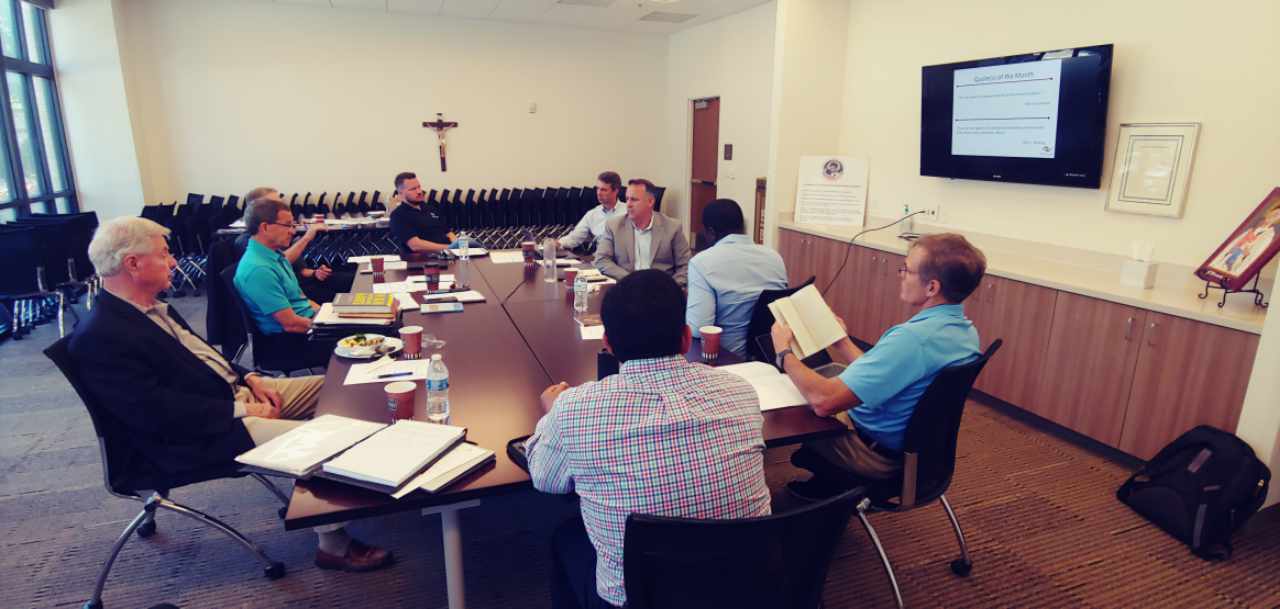
Learning the framework is one thing. Making it a habit is another.
Everything a leader needs to begin is on this page. But reading about a framework and using it under pressure are different skills, and the second one comes only with practice.
For teams that want that practice, Cima Strategic offers PDM Formation: a multi-week course in which a leadership team works through the framework together, applying it to real decisions from its own organization. By the end, the team shares a common language for hard calls and the habit of asking the central question before a decision is made, not after.
PDM Formation is offered on a limited basis, and it always begins with a conversation about whether it fits the team and the moment.
Principled decisions hold best in an organization built to support them.
A framework can change how one decision gets made. Whether the change lasts depends on what surrounds it. A leadership team can learn to decide well and still be undone by hiring that ignores character, or by a culture in which no one is held to what was decided.
That is why Principled Decision Making has a home inside Mission & Traction, Cima Strategic’s work with whole organizations. Mission & Traction rests on three disciplines: Hiring, Formation, and Accountability. Hiring finds people who fit the mission in character and temperament as well as skill. Formation develops those people as leaders, and Principled Decision Making is a central part of it. Accountability protects the mission, keeping what was decided aligned with what gets done.
Taught on its own, the framework makes better decisions. Inside Mission & Traction, it becomes part of how the organization runs.
See how Mission & Traction works →Take the framework with you.

The printable worksheet
The full four-step process on paper, with room to work through a decision of your own and a complete worked example to follow. It’s free, and it arrives by email within a few minutes.
Cima Strategic will email the worksheet, along with occasional notes on leading with principle. Unsubscribe anytime.

Facing a hard decision right now?
PrincipledDecisions.AI tells the story of one CEO’s hardest call and offers the Compass, an AI thinking partner built on this framework.
Visit PrincipledDecisions.AI →
HFA for Mission & Traction
weekly newsletterOne practical step each week toward mission and traction. Start from Week 1, no matter when you join.
SubscribeCommon questions about Principled Decision Making
About the framework
What is Principled Decision Making?
Principled Decision Making (PDM) is a framework for making hard choices by testing every option against two principles: the dignity of each person affected and the common good of everyone involved. It follows four steps: define the problem, name the people affected, lay out the options, and place each option on the Dignity Chart.
What is the Dignity Chart?
The PDM Dignity Chart™ is a tool within the framework. It is a four-quadrant chart with human dignity on one axis and the common good on the other. Plotting each option on the chart shows what that option honors and what it costs.
Is Principled Decision Making a religious framework?
Its two principles come from Catholic social teaching, and Cima Strategic says so openly. Using the framework requires no particular faith. Leaders of any background can apply it, because respect for persons and concern for the good of all are principles most people already hold.
How does it fit with EOS or another operating system?
It works alongside any of them. An operating system organizes how work gets done. Principled Decision Making addresses how hard choices get made, which most operating systems leave to the judgment of the leader.
Who is it for?
Anyone responsible for decisions that affect other people. It is most often used by owners, executives, and leadership teams facing choices where the financially sound answer and the right answer may not be the same.
When the decision is in front of you
What if every option hurts someone?
Then the goal is the option that does the least harm to dignity and the most for the common good, chosen with open eyes. The chart often helps here in a second way: seeing where each option falls short can suggest a new option no one had considered.
What if the principled choice costs money?
Sometimes it does, at least in the short term. The framework weighs the short term and the long term separately for this reason. A choice that protects trust today often protects the organization’s value over time, and the chart makes that trade visible instead of hiding it.
What if there is no time to work through a process?
The four steps can be done in an afternoon, or in an hour for a smaller decision. The one thing to avoid is letting the deadline make the choice. A decision deferred until circumstances force it is still a decision, and rarely a good one.
What if a choice is legal but still feels wrong?
That discomfort is worth taking seriously. The law sets a minimum, and many decisions that damage trust are entirely legal. The framework gives that unease a structure: name who is affected, then ask what the choice does to them.
Should a hard decision be made alone?
Rarely. The framework works best in conversation with a few trusted people who will be honest. Working through the steps together surfaces blind spots, and it means the final decision is understood by the people who must carry it out.
Bring a real decision. Leave with a clearer view of it.
The framework is here to use, and many leaders will never need more than this page and the worksheet. For those who would value a second set of eyes on a decision they are carrying, Darren Smith is glad to talk it through. The conversation is about the decision itself and how the framework applies to it.
Schedule a 20-Minute Conversation No pitch — just clarity. Or start with the worksheet ↑
P.O. Box 670101, Dallas TX 75367
(214) 353-9333
© Copyright 2026. Cima Strategic. All Rights Reserved.